Hair loss can affect more than the way you style your hair. A receding hairline, widening part, thinning crown or visible scalp may gradually change how you feel about your appearance.
At Estheticare Group Clinic, we provide personalised Hair transplant in Islamabad for men and women experiencing suitable patterns of permanent hair loss. Every treatment plan begins with a detailed assessment of your scalp, donor area, hair-loss pattern, medical history and long-term goals.
Our aim is not simply to place a high number of grafts. It is to develop a balanced restoration plan that respects your available donor hair, facial proportions and likely pattern of future hair loss.
Book a consultation to find out whether hair transplantation is suitable for you.
What Is a Hair Transplant?
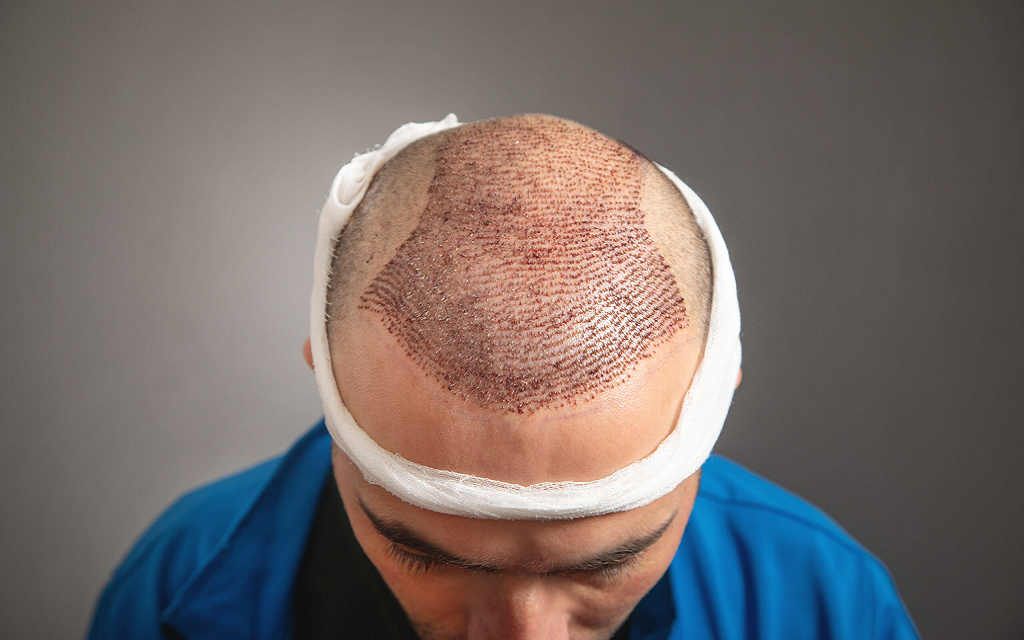
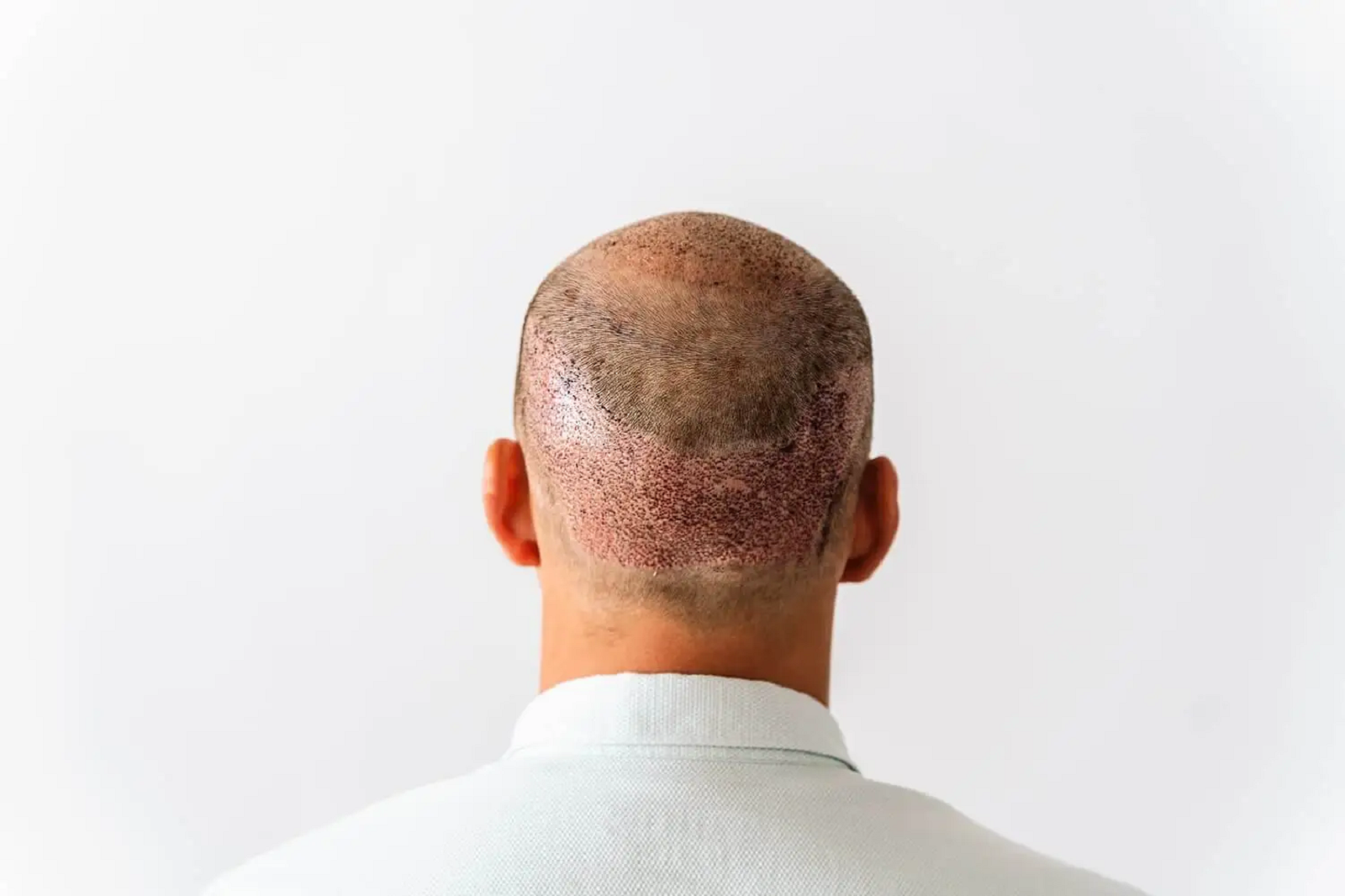
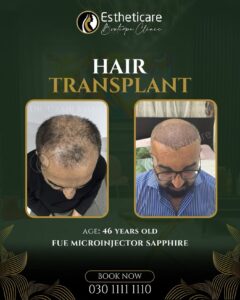
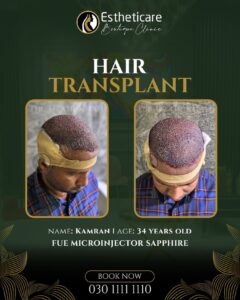
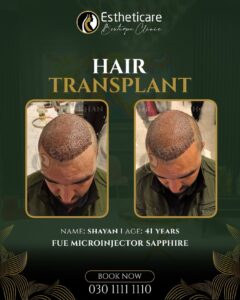
A hair transplant is a surgical hair-restoration procedure in which naturally occurring groups of hair follicles are taken from a suitable donor area, usually the back or sides of the scalp, and placed into areas affected by permanent thinning or baldness.
The two principal donor-harvesting methods are:
- FUE, in which individual follicular units are extracted from the donor area.
- FUT, in which a narrow strip of hair-bearing scalp is removed and divided into individual follicular-unit grafts.
Both methods can produce natural-looking improvement in appropriately selected patients. The right technique depends on your donor density, hair-loss pattern, hairstyle preferences, scalp characteristics and treatment goals.
What Is Hair Transplant Surgery?
Hair transplant surgery redistributes your own hair follicles from an area with relatively stable growth to an area affected by hair loss.
It does not create new follicles or multiply the number of follicles available. For this reason, careful donor-area management is one of the most important parts of treatment planning.
Hair follicles are commonly transplanted into areas such as:
- A receding frontal hairline
- Temporal recession
- The mid-scalp
- A thinning or bald crown
- Localised areas of scarring
- Selected areas of female-pattern thinning
- Eyebrows or facial hair in suitable cases
Each graft may contain one or more hairs. The surgeon plans the position, direction, angle and distribution of these grafts to create a result that works with your existing hair and facial features.
Hair Transplant Options at Estheticare Group Clinic
FUE Hair Transplant
Follicular Unit Excision, commonly called FUE, involves extracting follicular units individually from the donor region. Small extraction sites are left throughout the harvested area rather than one linear donor scar.
FUE may be considered for patients who:
- Prefer shorter hairstyles
- Want to avoid a linear donor scar
- Require a smaller or moderate number of grafts
- Have suitable donor density
- Want a potentially quicker initial recovery than FUT
FUE is not completely scar-free. It leaves many small extraction scars that are usually less noticeable when harvesting is planned carefully. Overharvesting can reduce donor density, which is why extraction pattern and long-term donor preservation matter. ISHRS guidance notes that FUE avoids a linear scar but should not be described as scarless.
FUT Hair Transplant
Follicular Unit Transplantation, or FUT, involves removing a narrow strip of hair-bearing tissue from the donor region. The donor area is closed with sutures or staples, and the strip is dissected into follicular-unit grafts for transplantation.
FUT may be considered when:
- A larger number of grafts may be required
- Preserving surrounding donor follicles is a priority
- The patient normally wears longer hair
- The scalp has suitable laxity
- A linear donor scar is acceptable
FUT creates a linear scar in the donor area. Its width and visibility can vary according to healing, surgical technique, scalp tension and future hairstyle.
Which Method Is Better: FUE or FUT?
There is no universally better technique.
FUE may suit one patient, while FUT, or a staged combination of both methods, may preserve donor resources more effectively for another. The choice should be based on an examination rather than marketing labels.
Your surgeon may consider:
- Current and expected future hair loss
- Donor-area density and stability
- Hair shaft diameter and texture
- Scalp laxity
- The number of grafts required
- Previous transplant procedures
- Preferred hairstyle
- Tendency to form noticeable scars
- The need to conserve donor hair for future sessions
Benefits of Hair Transplantation
For a suitable candidate, hair transplant surgery may provide:
Natural Hair Redistribution
Because the procedure uses your own follicles, transplanted hair can grow with characteristics similar to the donor hair from which it was taken.
Personalised Hairline Design
The hairline can be planned according to age, facial proportions, existing hair, donor capacity and the likely progression of hair loss.
Treatment for Different Areas
Transplantation may be used to address the frontal hairline, temples, mid-scalp, crown or selected localised areas.
Styling Flexibility
Once the transplanted hair has grown and matured, it can generally be washed, trimmed and styled like other scalp hair.
Long-Term Improvement
Follicles taken from a stable donor region are selected because they tend to retain their growth characteristics after transplantation. However, the surrounding non-transplanted hair may continue to thin, so future medical management or additional treatment may be recommended.
Options for Men and Women
Hair transplant surgery is not limited to male-pattern baldness. Selected women with stable, localised thinning and a suitable donor area may also be candidates. Female patients require careful diagnosis because diffuse thinning may affect both the recipient and donor regions.
Who Is a Good Candidate for a Hair Transplant?
You may be considered for hair transplantation when you have:
- A confirmed and reasonably stable pattern of permanent hair loss
- Adequate healthy hair in the donor area
- Realistic expectations about coverage and density
- Good general health for a surgical procedure
- A receding hairline, thinning crown or localised area suitable for restoration
- Hair loss that is unlikely to recover sufficiently with non-surgical treatment alone
- A willingness to follow postoperative instructions
The cosmetic outcome is also affected by characteristics such as hair texture, curl, colour contrast with the scalp and hair-shaft diameter.
When a Hair Transplant May Not Be the Right First Step
A transplant may need to be postponed or avoided when:
- Hair loss is rapidly progressing or has not been diagnosed
- The donor area is too thin or unstable
- Thinning is diffuse across most of the scalp
- Hair loss is caused by an active inflammatory or scarring scalp condition
- There is untreated alopecia areata
- Expectations exceed the available donor supply
- A medical condition increases surgical or healing risk
- The patient is very young and the likely future pattern is unclear
Some patients may benefit from diagnostic tests, medical hair-loss treatment, PRP or another management approach before transplantation is considered. PRP is a non-surgical treatment and should not be described as a hair transplant.
Hair Transplant Consultation and Planning
A detailed consultation helps determine whether surgery is appropriate and what can realistically be achieved.
1. Medical and Hair-Loss History
Your doctor will discuss:
- When the hair loss began
- How quickly it has progressed
- Family history of hair loss
- Previous treatments or transplant procedures
- Current medicines and supplements
- Medical conditions
- Smoking and lifestyle factors
- Your preferred hairline and coverage goals
2. Scalp and Donor-Area Assessment
The clinical team assesses the pattern of loss and the quality of the donor region. Important factors may include density, hair calibre, follicular-unit distribution, scalp condition and miniaturisation.
3. Hairline and Coverage Planning
A natural hairline is not simply a low line across the forehead. Its shape, height, irregularity, direction and density should be planned in relation to:
- Facial proportions
- Age
- Existing hair
- Donor availability
- Future hair loss
- Desired level of maintenance
4. Graft Estimate
The estimated number of grafts depends on the size of the recipient area, desired visual coverage, existing hair, donor capacity and surgical strategy.
A graft is a follicular unit and may contain more than one hair. Therefore, “number of grafts” and “number of hairs” are not interchangeable.
5. Technique Recommendation
After examining the scalp, the surgeon recommends FUE, FUT or another appropriate plan and explains the advantages, limitations, recovery and possible risks.
How Is a Hair Transplant Performed?
The exact process depends on the selected method and individual treatment plan.
Before the Procedure
You will receive preparation instructions. These may cover medicines, supplements, smoking, alcohol, scalp care, hair length and transport arrangements.
Do not stop prescription medication unless your treating doctor has advised you to do so.
Donor Preparation
The donor region may be fully shaved, partially shaved or prepared in another way depending on the technique and plan. In selected FUE cases, partial or unshaven approaches may be possible, although suitability varies.
Local Anaesthesia
Hair transplantation is commonly performed using local anaesthesia. You may feel brief discomfort during administration and sensations such as pressure or movement during the procedure.
No ethical clinic should promise that every patient will experience a completely painless procedure.
Graft Harvesting
For FUE, follicular units are removed individually.
For FUT, a strip of donor tissue is removed, the donor area is closed, and follicular units are dissected from the strip.
Recipient-Site Creation
Small recipient sites are planned in the thinning area. Their angle, direction, spacing and distribution influence the final appearance.
Graft Placement
The prepared grafts are placed into the recipient sites according to the surgical design. Handling and placement must be controlled carefully to protect the follicles.
Postoperative Review
Before leaving, you will receive instructions on graft protection, washing, sleeping position, medicines, activity and follow-up.
Recovery and Aftercare
Recovery differs between patients and techniques. Your surgeon’s instructions should take priority over general online guidance.
The First Few Days
You may notice:
- Mild soreness or tenderness
- Redness
- Swelling
- Small crusts around the grafts
- Tightness or temporary numbness
- Minor discomfort in the donor region
You may be advised to sleep with your head elevated and avoid touching, scratching or rubbing the grafted area.
Washing the Scalp
The clinic will tell you when and how to begin washing. A gentle method is usually required during the early healing period. Avoid applying strong water pressure or unapproved products to the grafts.
Returning to Work
Some patients return to non-strenuous work within several days, while others prefer additional time because of visible redness, crusting, swelling or the nature of their job.
The NHS advises that some patients may need one to two weeks away from work and that the grafts require particular care during the first two weeks.
Exercise and Physical Activity
Strenuous exercise, bending, heavy lifting and activities that increase sweating may need to be restricted temporarily. Your surgeon will provide a schedule based on your procedure and healing.
Sun and Environmental Exposure
The treated scalp should be protected from strong sun, dust and avoidable irritation while healing. Ask the clinic when a loose hat and sun protection can be used safely.
Hair Shedding After Surgery
The visible shafts of some transplanted hairs commonly shed during the early weeks. This does not necessarily mean the follicles have been lost. Temporary postoperative shedding is recognised as part of the recovery process.
When Will I See Hair Transplant Results?
Hair transplant results develop gradually rather than immediately.
A general timeline may look like this:
- First 1-2 weeks: redness, crusting and early healing
- First several weeks: some transplanted hair shafts may shed
- Following months: early new growth may begin
- Later months: growth may become more visible and improve in texture
- Around 9-12 months: many patients can assess substantial maturation
- Up to 12-18 months: the crown or slower-growing areas may continue to mature
This is only a general guide. Growth rate, density, hair calibre, scalp health, technique and individual healing all affect the timeline.
A transplant cannot provide unlimited density. The visual result is limited by the number and quality of safely available donor follicles.
Are Hair Transplant Results Permanent?
Transplanted follicles are selected from areas expected to be more resistant to the process causing pattern hair loss. These follicles can provide long-term growth after successful transplantation.
However:
- Not every graft is guaranteed to grow.
- Hair characteristics can change with age.
- Existing non-transplanted hair may continue to thin.
- Additional medical treatment or a future procedure may be advised.
- The donor supply remains limited.
For these reasons, long-term planning is more important than pursuing the lowest possible hairline or the highest advertised graft count.
Risks and Considerations
Hair transplant surgery is generally considered safe when performed by an appropriately qualified and experienced surgeon, but every surgical procedure carries risk and outcomes are not completely predictable.
Possible risks and side effects include:
- Pain or tenderness
- Swelling
- Bleeding
- Infection
- Folliculitis
- Temporary numbness or altered sensation
- Itching and crusting
- Temporary shedding of nearby hair
- Poor graft growth
- Uneven density
- An unnatural hairline or growth direction
- Noticeable donor scarring
- Widening of an FUT scar
- Patchy appearance or donor overharvesting after FUE
- Asymmetry
- Need for corrective or additional surgery
- An adverse reaction to medication or anaesthesia
Seek medical advice promptly if you develop increasing pain, spreading redness, pus, fever, persistent bleeding or another unexpected symptom after surgery.
Hair Transplant Cost in Islamabad
The exact cost of a hair transplant cannot be determined responsibly without examining the scalp and donor area.
Factors that may affect the treatment cost include:
- The estimated number of grafts
- FUE or FUT harvesting method
- Size and location of the recipient area
- Complexity of hairline design
- Donor-area quality
- Previous transplant surgery or scarring
- Whether one or more sessions may be required
- Surgeon and clinical-team involvement
- Facility, anaesthesia and medical-supply requirements
- Follow-up and postoperative care included in the plan
A lower quote should not be considered in isolation. Patients should ask who will design the hairline, harvest the grafts, create the recipient sites and supervise the procedure.
After your assessment, Estheticare Group Clinic will provide a treatment recommendation and case-specific quotation.
Hair Transplant for Men
Male-pattern hair loss commonly affects the temples, frontal hairline, mid-scalp and crown.
Treatment planning for men should account for the possibility that hair loss will continue over time. A very low or overly dense frontal hairline may use donor grafts that could be needed later.
The objective is to create a mature, proportionate design that balances present improvement with long-term donor preservation.
Hair Transplant for Women
Women may seek treatment for:
- A widening central part
- Localised frontal thinning
- Traction-related hair loss
- Hairline refinement
- Stable areas of scarring
- Thinning after a previous procedure
Not every woman with thinning hair is a transplant candidate. Female-pattern hair loss may be diffuse and can sometimes involve the expected donor region. Diagnosis and donor assessment are therefore essential before surgery.
Depending on the harvesting plan and hairstyle, partial-shave or carefully concealed donor preparation may be discussed in selected cases.
Why Choose an Estheticare Group Clinic for a Hair Transplant in Islamabad?
Experienced Doctors
Our doctors have extensive clinical experience, including professionals with more than 8–10 years of experience in aesthetic medicine, plastic surgery and hair-restoration care.
Specialist-Led Assessment
Hair loss can have several causes. Your treatment journey begins with an assessment to establish whether transplantation is appropriate rather than automatically recommending surgery.
Personalised Treatment Plans
We consider your hair-loss pattern, donor capacity, facial structure, hair characteristics, medical history and goals before developing a plan.
Natural Hairline Planning
Hairline shape, direction, distribution and age appropriateness are considered together. The aim is a balanced result that does not look disconnected from your existing hair.
Donor-Area Preservation
Donor hair is finite. We plan harvesting with both the current procedure and possible future hair loss in mind.
Modern Hair-Restoration Techniques
Our team uses contemporary planning, harvesting and graft-placement methods selected according to the individual case.
Care for Men and Women
We assess male and female hair-loss patterns separately and recommend surgery only when the clinical findings and donor supply support it.
Patient-Focused Care
Patients receive information about the procedure, recovery, limitations, alternatives and risks so they can make an informed decision.
Convenient Islamabad Location
Estheticare Group Clinic serves patients seeking hair-restoration treatment in Islamabad and the surrounding Rawalpindi–Islamabad region.
Frequently Asked Questions
1. Which is Better for a Hair Transplant: FUE or FUT?
Neither technique is automatically better for every patient. FUE avoids a linear donor scar and may offer a quicker initial recovery, while FUT can be useful when larger graft numbers or long-term donor management are priorities. Your surgeon should recommend a method after examining your donor area, scalp and expected pattern of future hair loss.
2. Is a Hair Transplant Painful?
Local anaesthesia is normally used to reduce pain during the procedure. You may feel brief discomfort while anaesthetic is administered and mild soreness or tightness during early recovery. Pain tolerance and treatment extent vary, so a completely pain-free experience cannot be guaranteed.
3. How Many Grafts Will I Need?
The graft estimate depends on the size of the thinning area, donor density, existing hair, hair-shaft thickness, desired coverage and long-term plan. A scalp examination is required for a meaningful estimate.
4. Will the Transplanted Hair Look Natural?
A natural result depends on appropriate patient selection, hairline design, donor management, recipient-site direction, graft distribution, surgical execution and healing. The aim should be a result suited to your facial proportions and available donor supply rather than an identical copy of another patient’s hairline.
5. Do I Need to Shave My Head?
Not always. FUE often involves shaving all or part of the donor region, but partial-shave or selected unshaven approaches may be possible. FUT may allow longer surrounding hair to conceal the donor incision. The recommendation depends on your technique, hair length and graft requirements.
6. Can Women have a Hair Transplant?
Yes, selected women can undergo hair transplantation. Suitability depends on the cause and distribution of hair loss and whether the donor area is stable. Women with diffuse thinning require particularly careful assessment.
7. When Can I Return to Work?
This varies with the procedure, your job and how comfortable you are with temporary redness, crusting or swelling. Some patients resume desk work within several days, while others allow one to two weeks. Follow the timeline provided by your surgical team.
8. Will Transplanted Hair Fall Out?
Some transplanted hair shafts commonly shed during the first several weeks. New growth may then develop gradually from the transplanted follicles. Continued loss of non-transplanted hair can still occur and may require separate management.
9. Can a Hair transplant Stop Future Hair Loss?
No. A transplant moves follicles into thinning areas but does not stop the biological process affecting your remaining non-transplanted hair. Your doctor may discuss medical treatment or monitoring to support the long-term plan.
10. How Much Does a Hair transplant Cost in Islamabad?
The cost depends on the number of grafts, harvesting technique, size of the treatment area, donor condition, complexity of the case, surgical team and aftercare. Estheticare Group Clinic provides a personalised quotation after examining your scalp and discussing your treatment plan.
Book Your Hair Transplant Consultation in Islamabad
A successful hair-restoration plan begins with an accurate diagnosis, not an advertised graft package.
Schedule a consultation at Estheticare Group Clinic in Islamabad to have your hair-loss pattern, scalp and donor area assessed by our specialist team. We will explain your suitable options, expected coverage, recovery, risks and case-specific cost before you decide whether to proceed.
Book your consultation today and receive a personalised hair-restoration assessment.